


How to Match a Flat Connector with PCB Requirements?
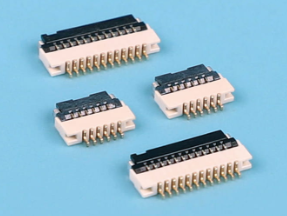
Flat Connector selection is an important consideration for electronic products that use flexible cable connections between circuit boards, displays, control modules, and internal components. Buyers need to evaluate more than the external dimensions when selecting a suitable model. Cable specifications, contact arrangements, installation space, electrical requirements, and assembly methods all influence whether a component can fit the intended application. For manufacturers and purchasing teams, reviewing these details before ordering samples can help reduce design adjustments and improve communication throughout the sourcing process.
Start with the Actual Product Application
The first step is to understand where the component will be installed and what function it needs to perform. Electronic devices have different internal structures, and available installation space can vary considerably between product categories.
For example, display modules may require a compact connection between the screen and its control board. Household appliances may use flexible cables to connect buttons, sensors, and internal control circuits. Camera modules and portable electronics may have additional restrictions involving cable direction and enclosure dimensions.
Buyers should provide information about the application, installation position, and expected working environment. Photos, assembly drawings, or preliminary PCB layouts can help manufacturers understand the project more clearly. This information also makes it easier to discuss suitable product configurations.
Match Cable Dimensions and Contact Pitch
Cable compatibility should be checked before confirming a product model. Pitch refers to the center-to-center distance between adjacent conductive contacts. The cable and the selected component must have matching pitch specifications.
The number of contacts is another important consideration. Buyers should count the required conductive positions according to the circuit design instead of estimating from the overall cable width. A mismatch may create unnecessary redesign work or prevent the cable from fitting correctly.
Cable thickness and exposed contact length also deserve attention. Even when pitch and contact count match, differences in thickness or insertion dimensions may affect assembly. Manufacturers can use technical drawings to compare these measurements with the product specifications. Providing the actual cable drawing helps avoid misunderstandings during sample development.
Confirm Contact Direction and Cable Entry
Contact direction determines how the conductive surface of a flexible cable meets the internal contacts. Depending on the product structure, a design may use top-contact, bottom-contact, or dual-contact arrangements.
Buyers should check the exposed conductive side of the cable and compare it with the product drawing. They should also consider the direction from which the cable enters the housing. Incorrect orientation can make installation difficult or prevent the circuit from functioning as intended.
Cable routing is equally important. A flexible cable may need to pass around a display, enclosure, or internal support. Its bending direction and available clearance should be reviewed during the design stage. Planning the route in advance can help avoid excessive folding or pressure near the contact area.
Evaluate the Locking Structure
The locking mechanism helps hold the cable in its intended position after insertion. Different designs may use flip-lock, slide-lock, or other retention structures. The suitable option depends on assembly procedures, available access, and expected maintenance requirements.
Zero Insertion Force structures are commonly used where controlled cable insertion is important. They allow the locking part to open before the cable is inserted and close afterward to secure the connection. Other structures may use a simpler insertion method, depending on their intended design.
Buyers should consider whether the product will be assembled once during manufacturing or opened during future maintenance. They should also check whether workers or automated equipment have enough space to operate the locking mechanism. These details can influence both installation convenience and production planning.
Review Electrical and Material Requirements
Electrical specifications should correspond to the actual circuit. Buyers should identify the required current, voltage, contact resistance, and operating temperature before requesting a quotation. Applications involving signal transmission may also require attention to layout and transmission characteristics.
Material selection is another point to discuss. Conductive contacts and insulating housings serve different functions, so their material properties should match the operating environment. Contact plating, housing strength, and temperature resistance may influence product suitability.
Instead of relying on a general product description, purchasing teams should request technical drawings and relevant specification sheets. Reviewing documented parameters makes it easier to compare different configurations and determine whether they meet the requirements of the intended device.
Check Manufacturing and Assembly Compatibility
A component may meet the dimensional requirements but still need further evaluation before production. Buyers should confirm the mounting method, PCB footprint, placement orientation, and assembly process. Surface-mount installation, for example, requires compatible board pads and suitable production settings.
Sample testing is a practical part of supplier evaluation. Engineers can install samples on an actual PCB and check cable insertion, locking operation, electrical continuity, and overall fit. Any issues identified during this stage can be discussed before production quantities are confirmed.
Purchasing teams should also ask about packaging, inspection procedures, order quantities, and production schedules. Clear communication about these arrangements helps both parties prepare for the manufacturing process and manage project expectations.
Work with a Manufacturer That Understands Your Requirements
A useful supplier discussion should cover more than price and delivery time. Buyers can prepare a specification sheet containing cable pitch, contact count, cable thickness, contact direction, mounting style, and application details. This gives the manufacturer a practical reference when reviewing the requested configuration.
Customization may be worth discussing when a standard design does not match the available installation space or circuit layout. Buyers can explain which dimensions or structural details need adjustment and ask about sample arrangements, technical review, and production planning.wendaelectronics works with customers seeking electronic connection components for different product applications. Sharing drawings and project requirements can support more focused communication about dimensions, configurations, and manufacturing needs. Before confirming an order, buyers should review the technical information, test the sample, and make sure the selected design fits the actual assembly process. To discuss product options and manufacturing support, visit https://www.wendaelectronics.com/ and contact the team with your project requirements.
 Portuguese
 English
 Arabic
 French
 Spanish
 Deutsch
 Turkish
 Dutch
 Italiano
 Russian
 Romaian
 Portuguese (Brazil)
 Greek