


How Rodless Pneumatic Cylinders Support Space-Efficient Automation
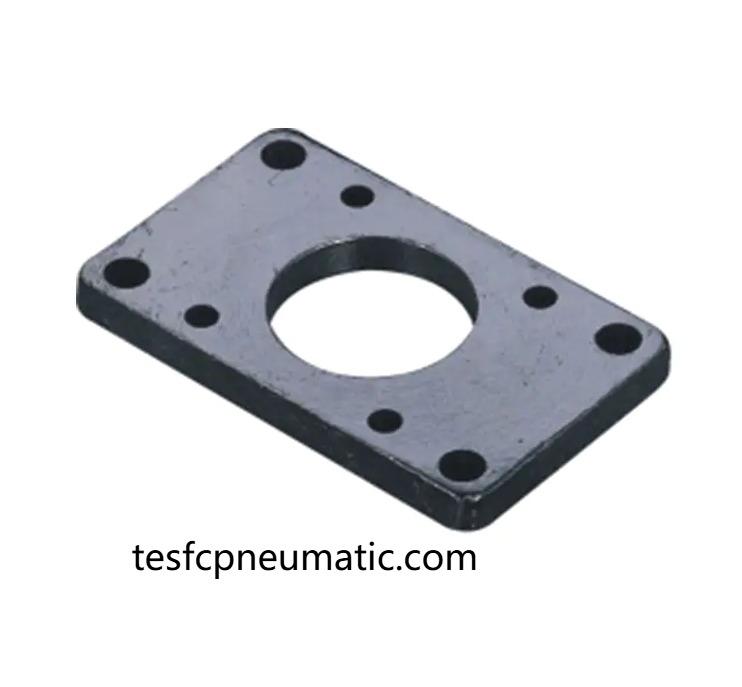
Space management is an important part of designing automated machinery, especially when equipment needs to move products between stations without occupying unnecessary room. A Rodless Air Cylinder creates linear motion through an internal piston connected to an external carriage, avoiding the need for a conventional piston rod to extend beyond the cylinder body. This arrangement can support product transfer, positioning, sorting, and assembly operations where the movement path must fit within a carefully planned machine layout. Its suitability depends on material quality, load support, sealing design, control compatibility, and the way the actuator interacts with surrounding equipment.
Material selection affects the cylinder's durability, movement quality, and maintenance requirements. Aluminum alloys are commonly used for cylinder bodies because they offer a useful balance of structural strength and manageable weight. Steel may be selected for guide components, mounting parts, or moving elements that experience repeated contact and mechanical stress. Surface treatments can help protect exposed parts against wear or environmental influences, depending on the application. Internal seals are equally important because they help retain compressed air and maintain the separation between working chambers. Their material must suit the operating environment and the condition of the air supply. Buyers should also examine the carriage, guide structure, and connection components as a complete assembly, since the performance of the cylinder depends on how these parts work together.
Choosing the right design begins with understanding the task and its surrounding conditions. Buyers should identify what the cylinder needs to move, how the load will attach to the carriage, and whether the movement will occur horizontally, vertically, or in another orientation. The available installation space and required travel path should be considered alongside the support needed to keep the moving assembly stable. A basic rodless design may suit straightforward transfer tasks, while applications involving offset loads or additional mechanical stress may require an integrated guide structure. The method used to transfer motion from the internal piston to the carriage is another important consideration. Reviewing these factors with a supplier helps clarify whether a mechanical connection, magnetic coupling, or guided arrangement is appropriate for the intended equipment.
The operating principle relies on compressed air moving a piston inside the cylinder. As air enters the working chamber, the piston travels along the internal barrel and drives the external carriage through the cylinder's motion-transfer mechanism. In mechanically coupled designs, a connection links the internal piston with the carriage through the cylinder structure. Magnetic designs transfer movement through magnetic coupling, allowing the carriage to follow the internal piston without the same mechanical connection. Each arrangement has different considerations involving sealing, load capacity, and operating conditions. Directional valves control the air supply, while flow-control components help manage movement speed. Depending on the equipment, sensors can provide position feedback and cushioning can help reduce impact near the end of travel.
User experience depends on how smoothly the actuator integrates into daily production. Accessible mounting points can simplify installation, while clearly positioned air ports make tubing routes easier to plan. A well-supported carriage can help maintain stable movement when the connected fixture or workpiece places demands on the guide structure. However, the cylinder should not be expected to compensate for unsuitable mounting or excessive loading. Correct alignment, appropriate air preparation, and compatible control components all contribute to dependable operation. Maintenance teams should periodically inspect seals, connections, mounting fasteners, carriage movement, and guide surfaces according to the manufacturer's instructions. Before carrying out maintenance, the air supply must be isolated and stored pneumatic energy managed in line with workplace safety procedures.
Design and appearance influence how the cylinder fits into a complete machine. Because movement takes place along the cylinder body, rodless configurations can help reduce the extra clearance needed for an extending piston rod. This can be useful in transfer stations, packaging systems, and assembly equipment with tightly arranged components. The carriage shape, mounting arrangement, connection positions, and availability of sensor accessories can affect the ease of integration. Some designs include guides to support loads and help manage unwanted movement, while others prioritize a simpler structure for applications with less demanding guidance needs. A neat exterior can also make inspection easier, but visual appearance should remain secondary to mechanical compatibility, load requirements, and accessibility for servicing.
Zhejiang Feishengya Pneumatic Components Co., Ltd. supplies pneumatic components, including rodless cylinder solutions for industrial motion applications. When planning a new automation station or adapting existing machinery, buyers can discuss load characteristics, mounting conditions, travel requirements, motion-transfer methods, and control arrangements with the supplier. Considering the actuator alongside valves, fittings, tubing, and other supporting components can help ensure that the complete pneumatic system is suitable for the task. More information about the company's products and pneumatic solutions is available at https://www.tesfcpneumatic.com/.

 English
 Arabic
 French
 Spanish
 Portuguese
 Deutsch
 Turkish
 Dutch
Dutch
 Italiano
 Russian
 Romaian
 Portuguese (Brazil)